In many industrial companies, quality assurance seems to work reliably. That is, until growth, increasing complexity, or regulatory pressure expose the limits of the system. A well-designed test architecture shifts quality assurance from the end of the production process to the very beginning. This not only creates capacity and long-term stability, but also builds the structural flexibility needed to respond confidently to market changes, scaling demands, and evolving regulations.
Why Functioning Quality Systems Can Be Misleading
In stable production environments, structural weaknesses often go unnoticed for long periods. Manual inspections, experienced staff, and established routines compensate for gaps in the system. As long as production volumes and product variants remain manageable, this approach works surprisingly well.
Problems arise when the environment becomes more demanding. Higher volumes, shorter delivery times, more complex supply chains, and stricter regulations increase pressure on the system. Dependencies on individual specialists, undocumented knowledge, and non-standardised inspections gradually turn into operational risks.
When errors are only detected during installation or commissioning, the consequences go beyond rework and delays. They consume management attention, force reactive decision-making, and create hidden opportunity costs. The situation becomes critical when deviations are only discovered at the customer site—damaging not only finances, but also trust and reputation.

How Scaling Exposes the Limits of Manual Testing
Traditional testing strategies have grown organically over time. For years, a final system test was considered sufficient proof of quality. But in today’s distributed, modular system architectures, this approach is no longer enough.
Late-stage testing identifies problems at a point where fixes are expensive and time-consuming. Manual tests are rarely fully standardised and difficult to reproduce. Corrections are often made in isolation, without feedback into the system. As a result, they go undocumented and depend entirely on the individual performing them. Without consistent data, it is impossible to know whether a deviation came from the product, the process, or the tester.
The real weakness of these approaches is not a lack of technology, but a lack of system thinking. Individual components are optimised in isolation, while the interactions between them are ignored. Quality is inspected - not engineered.
Why Late Testing and More Staff Are Not the Answer
An effective testing strategy starts much earlier. Instead of testing complete systems at the end, quality assurance is deliberately moved upstream—to subsystems and suppliers. Modular test architectures make it possible to qualify individual components under realistic conditions before they are integrated. A systemically designed test concept establishes clear logic, reproducible results, and continuous data capture across the entire lifecycle.
This transparency changes decision-making. Deviations become visible earlier. Systems and suppliers can be compared more effectively. And quality becomes a manageable parameter.
Moving Quality Upstream
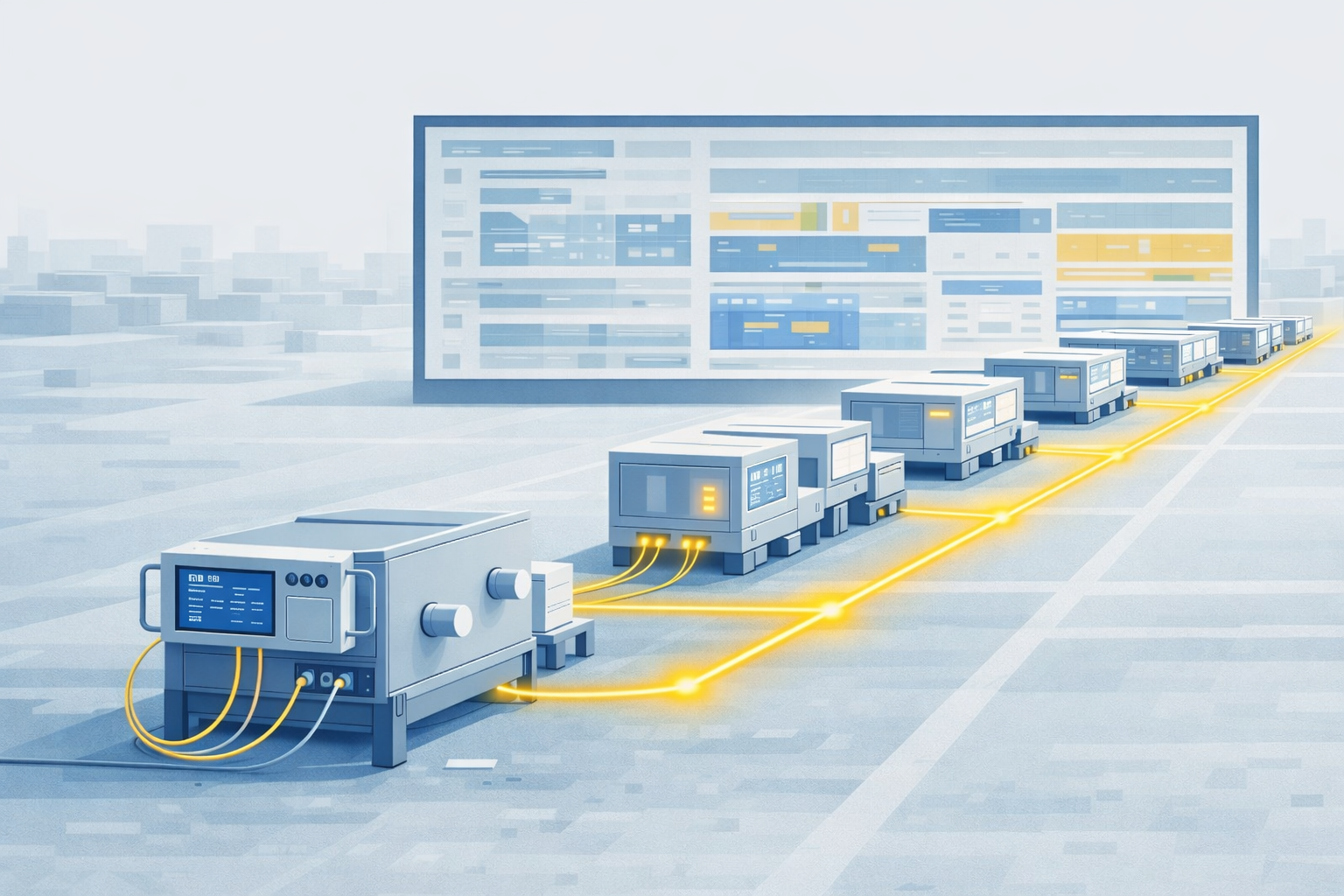
In practice, successful test concepts depend less on individual technologies and more on the ability to design and implement a consistent architecture. Test fixtures, sequences, and interfaces must be designed to remain objective, reproducible, and maintainable.
Process-driven test systems replace subjective assessments and reduce dependence on individual know-how. In regulated environments, such architectures support compliance with DQ, IQ, OQ, and PQ requirements—without overburdening the testing process.
A key success factor is defining the right test cases. Testing everything is not economical. Testing too little is risky. The ideal approach is risk-based and balanced, ensuring that the root cause of any deviation can be clearly identified. Experience and methodology are essential to determine the optimal level of testing and to deliberately exclude special cases.
Designing Quality Instead of Controlling It
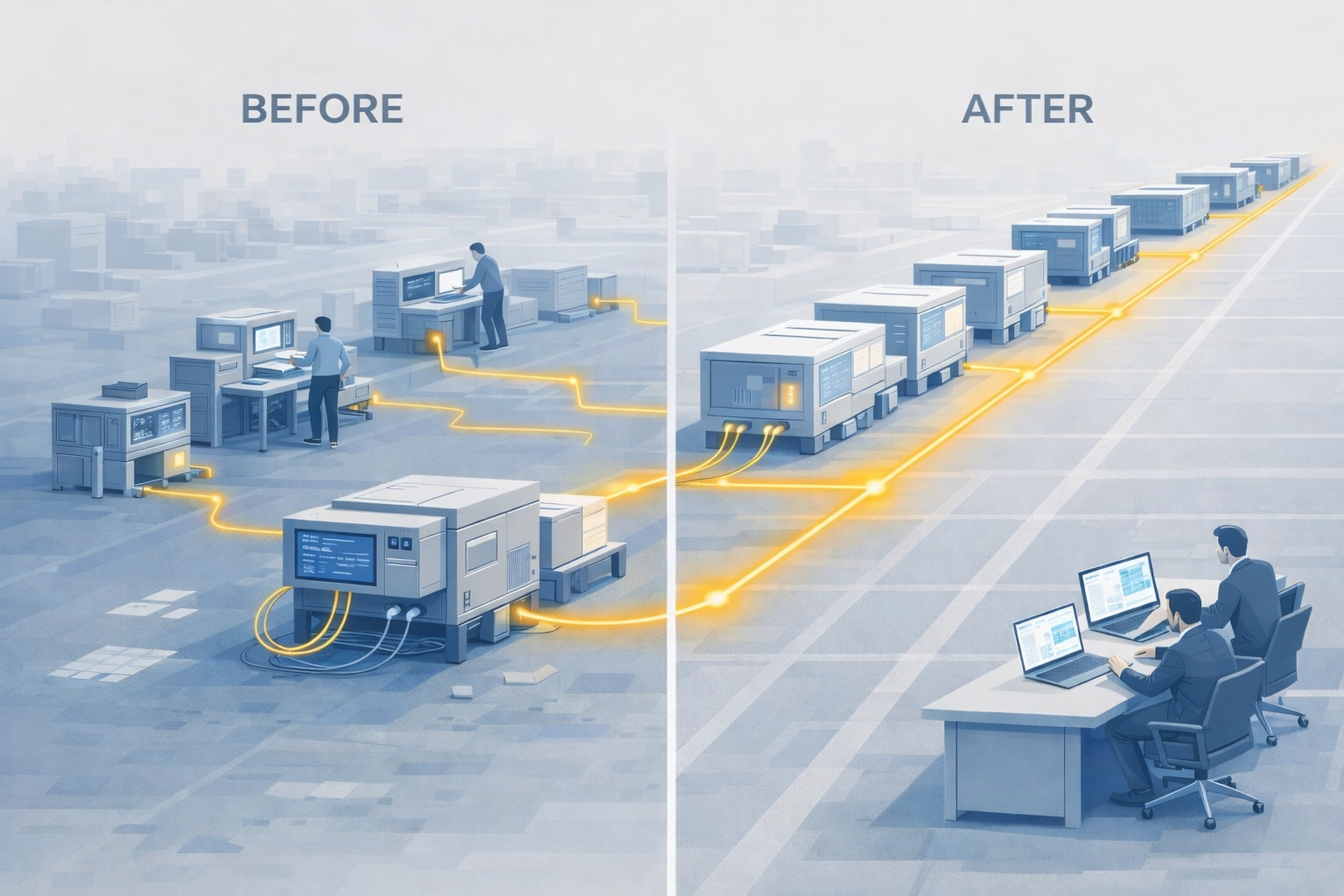
Introducing a systemic test concept is not just a technical project. It changes roles, responsibilities, and long-established routines. Concerns about job security or loss of influence must be taken seriously. In practice, however, the role of test engineers often becomes more engaging as repetitive manual tasks disappear.
Successful projects focus on capturing the implicit knowledge of experienced technicians and transferring it into standardised processes. Employees evolve from manual testers into supervisors and optimisers of testing processes. Acceptance grows when experience is visibly valued and integrated into the new system. At the same time, the transition requires clear ownership. Without it, even well-designed test systems gradually lose effectiveness.
From Operational Safeguard to Strategic Investment
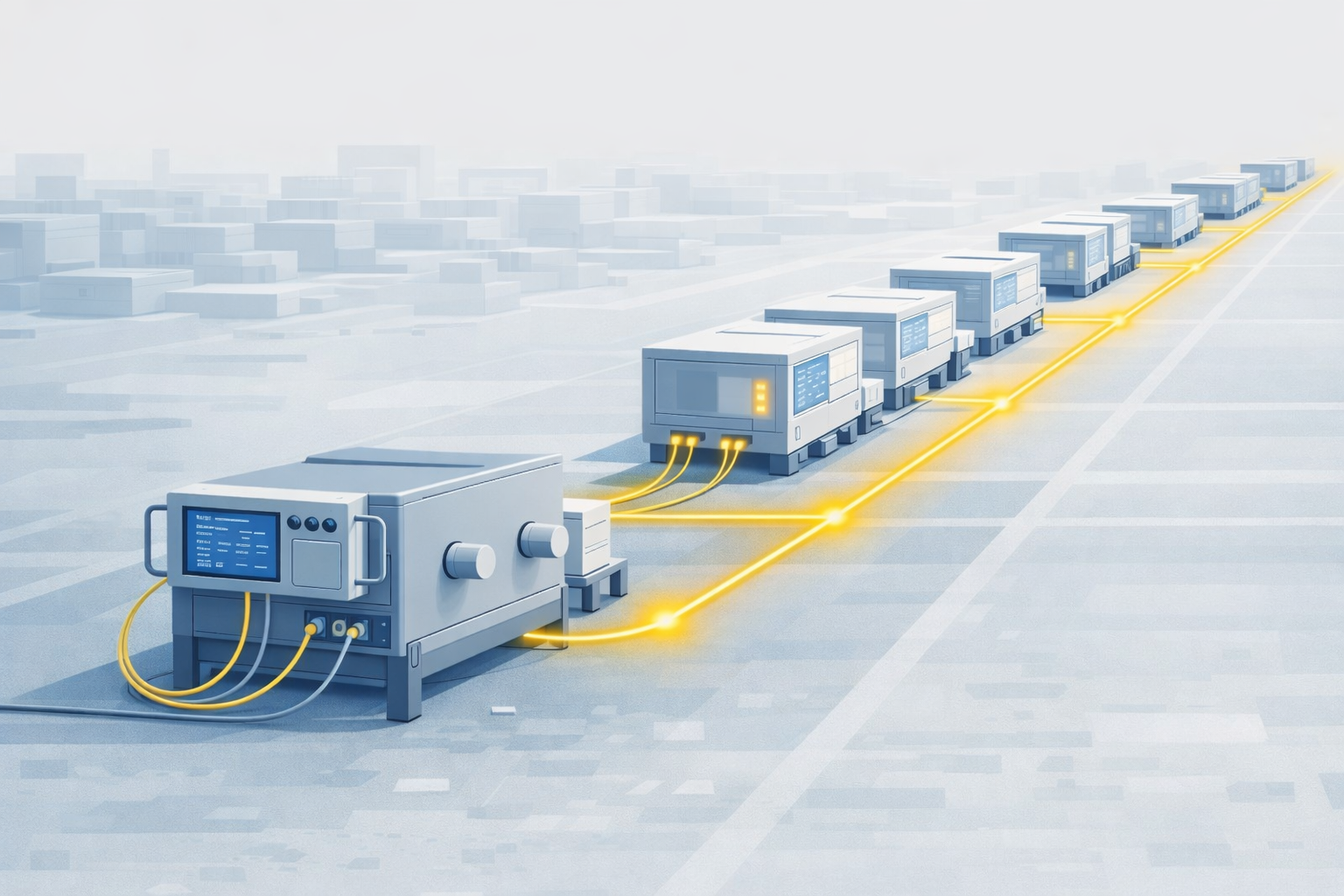
In comparable projects, we see similar effects time and again. The time from project commissioning to a productive system is reduced, because qualified subsystems can be integrated smoothly. Standardised testing lowers costs and stabilises throughput. It also reduces risk - results are reproducible and no longer depend on individual judgement.
Continuous data capture remains available throughout the entire lifecycle, even when a system is resold. This makes equipment condition traceable, maintenance more predictable, and investments more secure over the long term. Second-life concepts or structured markets for used machinery only become viable under these conditions. Comparability between systems also provides an objective basis for supplier and investment decisions.
As the COO of an industrial company put it:
"Working with Helbling helped us stop treating quality as an operational bottleneck and start treating it as a controllable process. Today, we can pursue growth without constantly worrying about hidden risks in the supply chain." *
What Companies Risk by Doing Nothing
Companies that continue to rely on centralised, late-stage testing remain vulnerable to quality fluctuations and bear the full risk of costly rework or product recalls. Strategic growth objectives come under pressure because operational bottlenecks cannot be controlled.
In an increasingly volatile environment, success is no longer defined by maximum utilisation - but by the ability to scale operations reliably. That means being able to adjust delivery capacity both upward and downward. Only companies that can expand capacity in a controlled way - and reduce it again when needed—remain operationally resilient.
As one CEO put it:
"This initiative secures our long-term delivery capability in a volatile market environment. That is what determines competitiveness today." *
* We respect the confidentiality requirements of our clients. The quotations originate from real projects. Names and customer-specific details are intentionally omitted.
Evaluate and systemaically improve your test architecture
If your final testing stage has become a bottleneck, audit pressure is increasing, or scaling eff orts are slowing down, a targeted analysis of your existing testing architecture can be worthwhile.
In a structured discussion we clarify:
- Where systemic risks arise today
- Which tests should move upstream into sub-systems or to suppliers
- Which test cases are economically meaningful – and which are not
- How a modular, scalable testing architecture can be established
- How costs can be reduced
Result: a prioritised assessment of the most impactful levers and a clear next step for implementation.
Authors: Daniela Biberstein, Stefan Huggenberger
Main image: Helbling